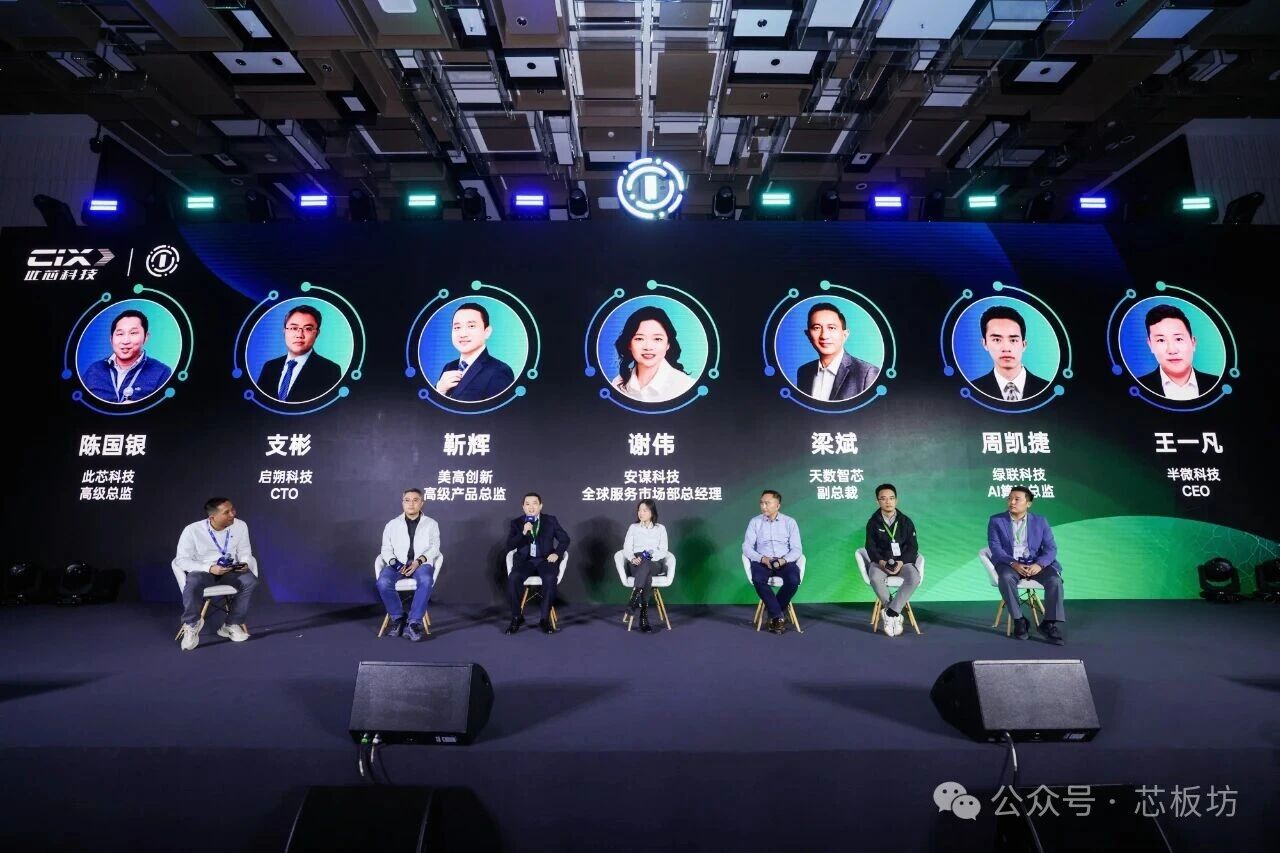
Recently, this core technology held the 2025 Ecological Conference in Shanghai.
ERNIE-4.5-21B-A3B
DeepSeek-R1-Distill-Qwen-7BStable Diffusion v1-4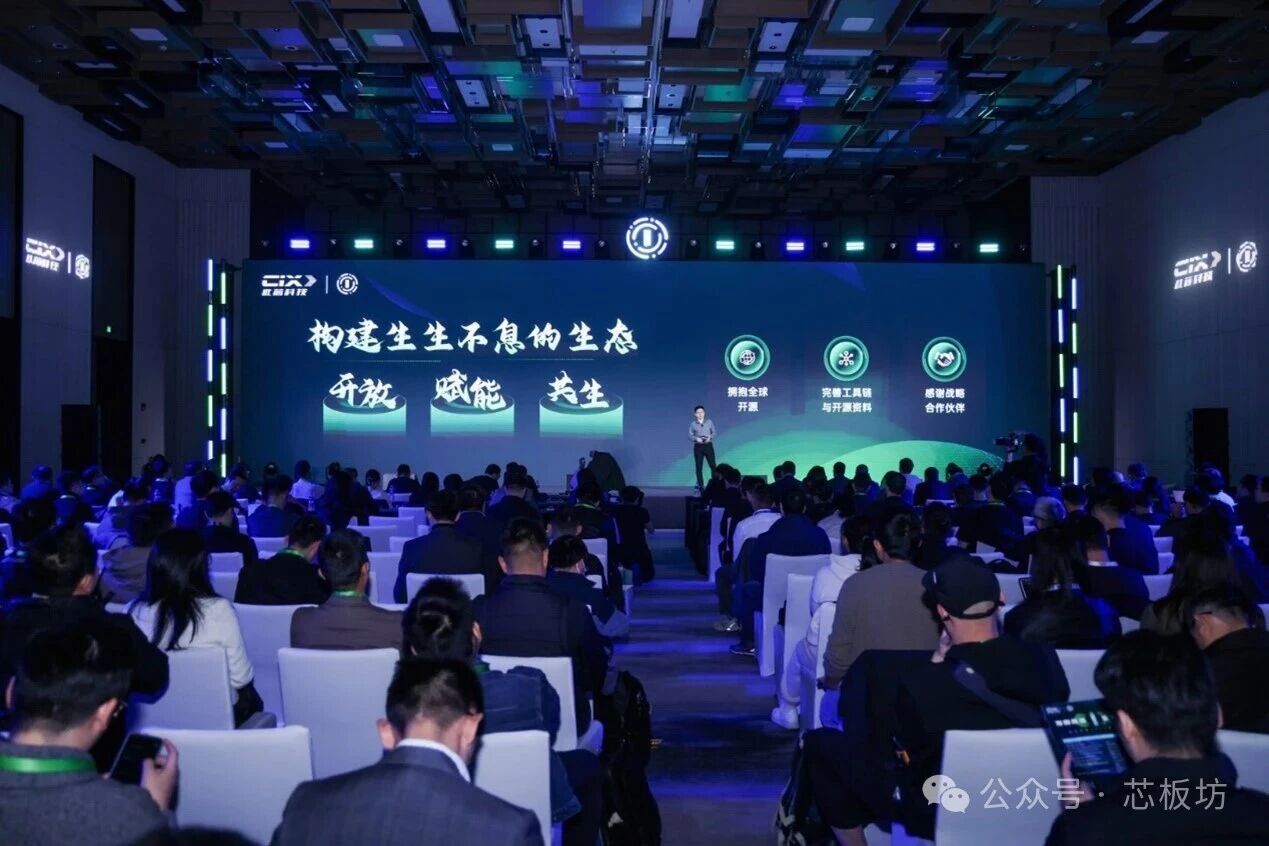
A series of products based on the core P1 are released with the theme of endless life.
Let's look at the orange pie one by one. Before that, they released the orange pie 6Plus. After that, there will be two products based on this core, one is Orange Pie CM6 Pro.
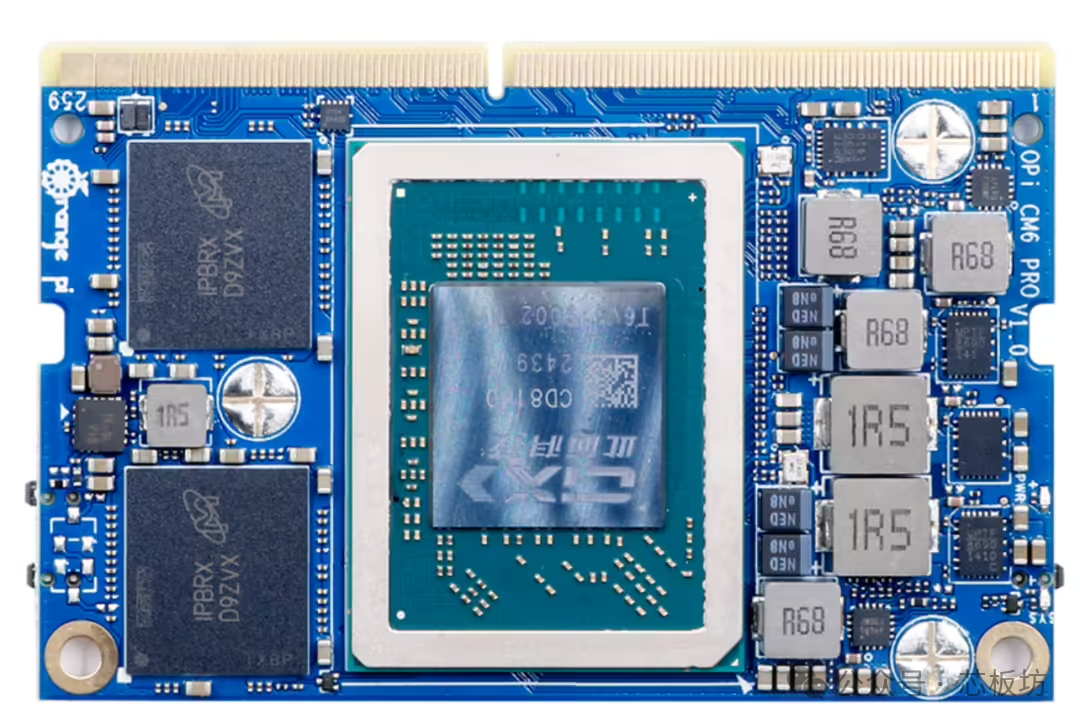
It is a core board with the shape of SODIMM, and its width is similar to that of notebook memory. Obviously, this product can be significantly reduced in size, and its positioning is a highly integrated embedded computing card. With the expansion board, more scenarios can be realized, such as routers, NAS, industrial control and so on. Compared with the previous big board, this product can really make this core quickly enter the application scene. There is also a small orange pie 6.
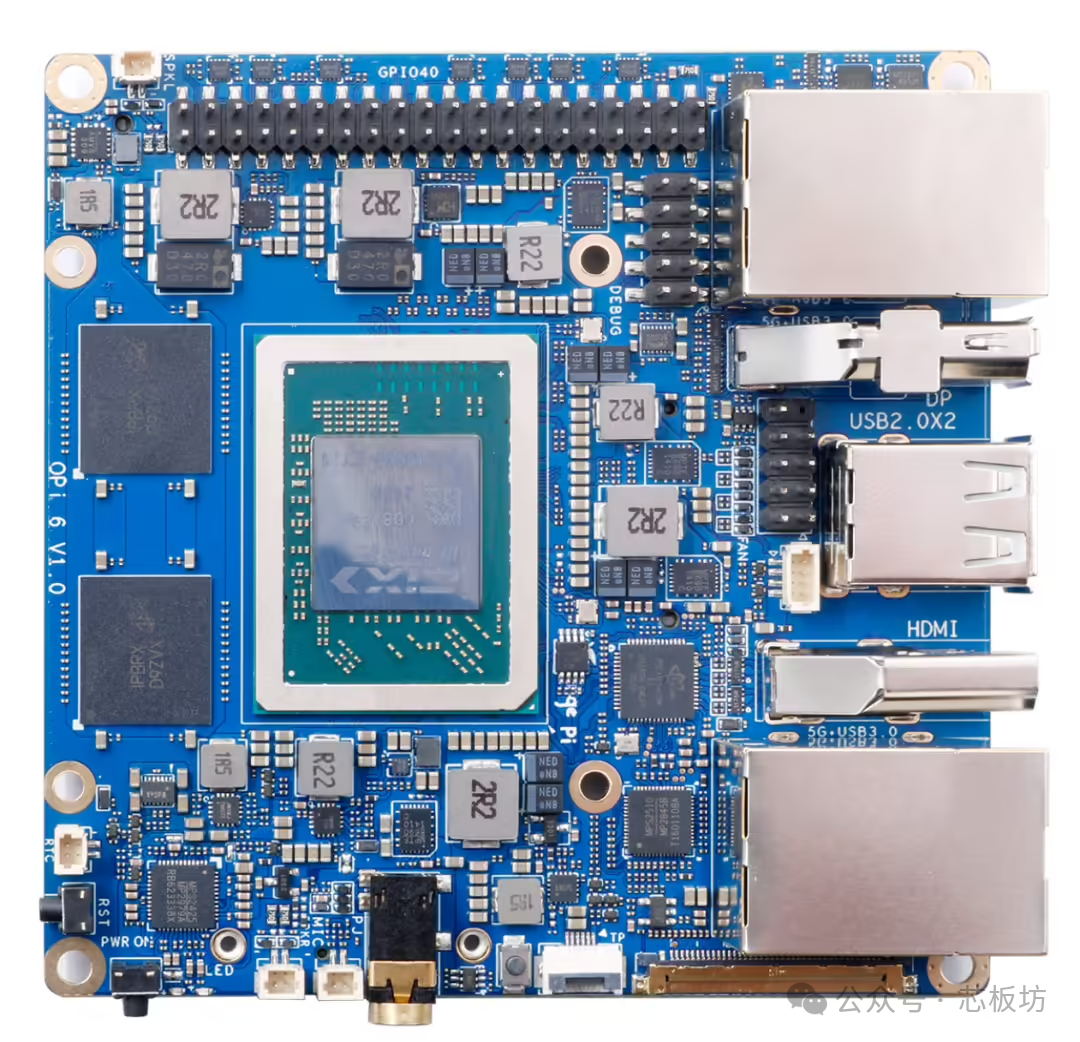
As can be seen from the picture, the size is much smaller than the orange pie 6Plus.
I think there are still two 5GbE network ports, as well as DP interface, HDMI interface, two USB3.0 interfaces and two USB2.0 interfaces, all of which are the same as Orange 6Plus.
Just cut off two full-featured Type-C interfaces. I don't see the power interface in the picture, so it is estimated to be placed on the back. What's more, I still need to wait until it is officially released.
I found that the size is almost exactly where the two Type-C interfaces are removed from the Orange Pie 6Plus. I guess the size may be about 89x89mm, and the back can just hold the M.2 2280 NVMe.
There are fewer interfaces. The cost can certainly be further reduced. At present, the price of the 16GB version of Orange Pie 6 Plus is 1678, and Orange Pie 6 hopes to pull the price of this core chip development board to 1299, or even go crazy and directly achieve 999, but I don't think it will be so radical.
These two products, I guess, the minimum matching of orange pie CM6Pro can reach 1199, and orange pie 6 can reach 1299.
Another interesting product is the six-link intelligent notebook computer.
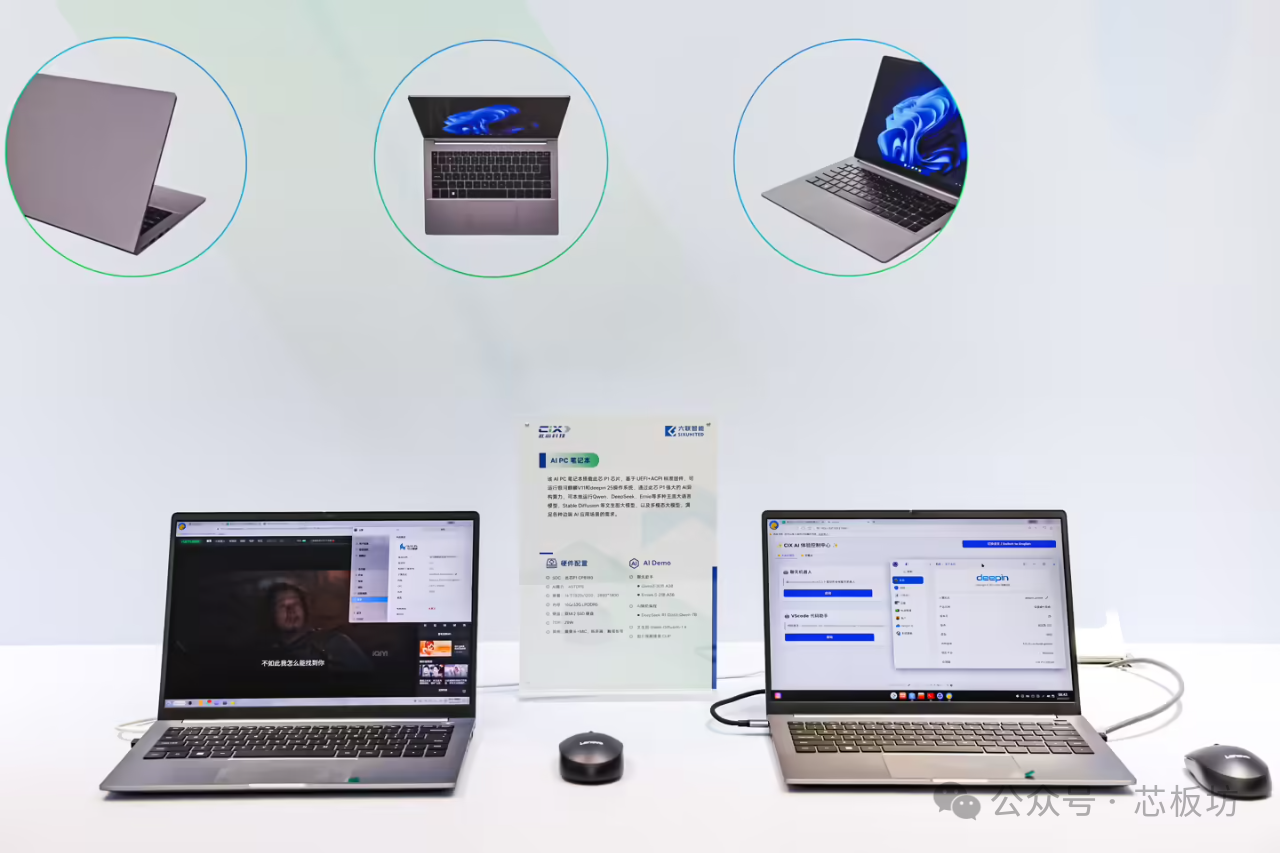
With a 14-inch screen, the resolution can be selected from 1920x1200 or 2880x1800, which is a ratio of 16:10. This is highly praised, and 16GB or 32GB LPDDR5 memory can be selected, with two M.2 SSD slots. 28W TDP。
Support Galaxy Kirin V11 and Deepin 25, so it seems that these two operating systems are basically stable in this kernel ecology.
Support to run Qwen3-30B-A3B
ERNIE-4.5-21B-A3B
DeepSeek-R1-Distill-Qwen-7B
Stable Diffusion v1-4
Chinese-CLIP and other models, many models have been able to play.
And Beiqi Technology also has development boards and Mini PC using this core chip.
Deep Digital Intelligence launches AI PC compatible with Framework modular notebooks.
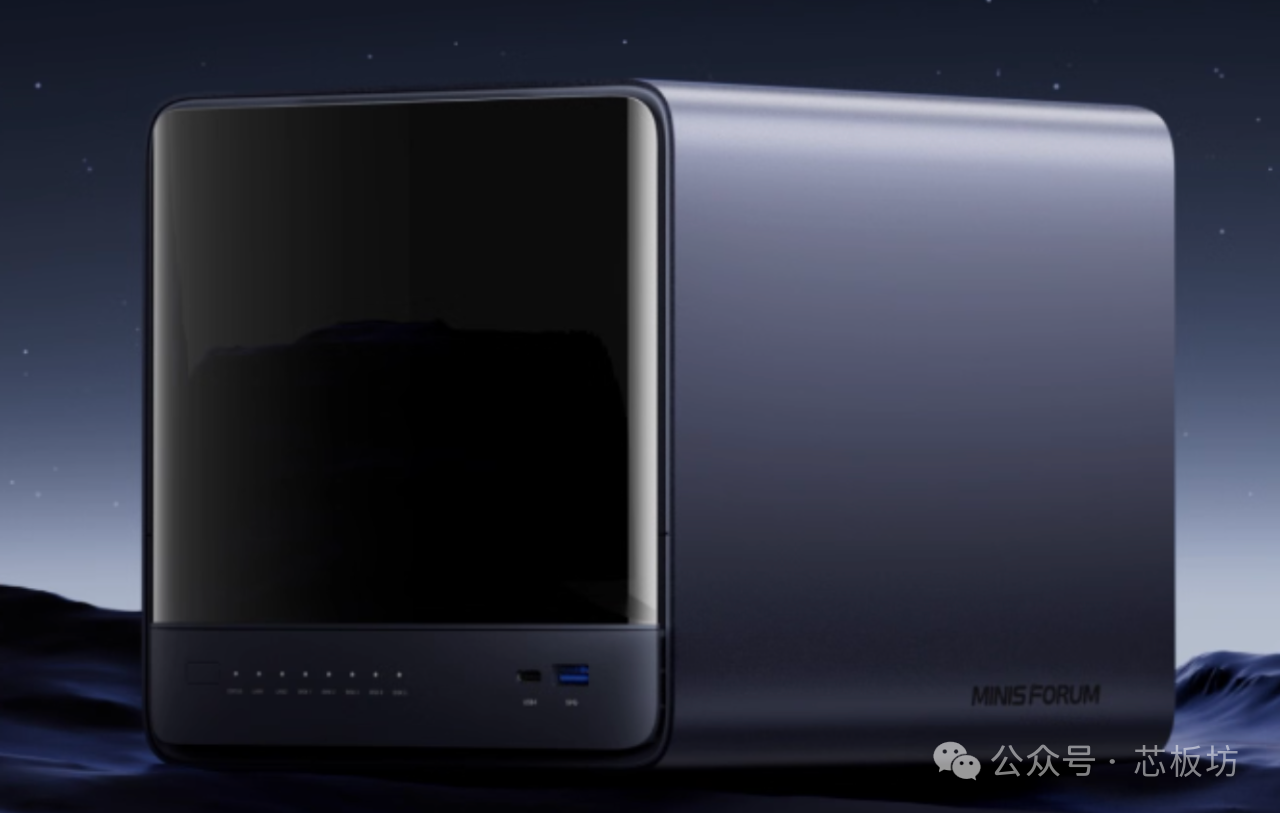
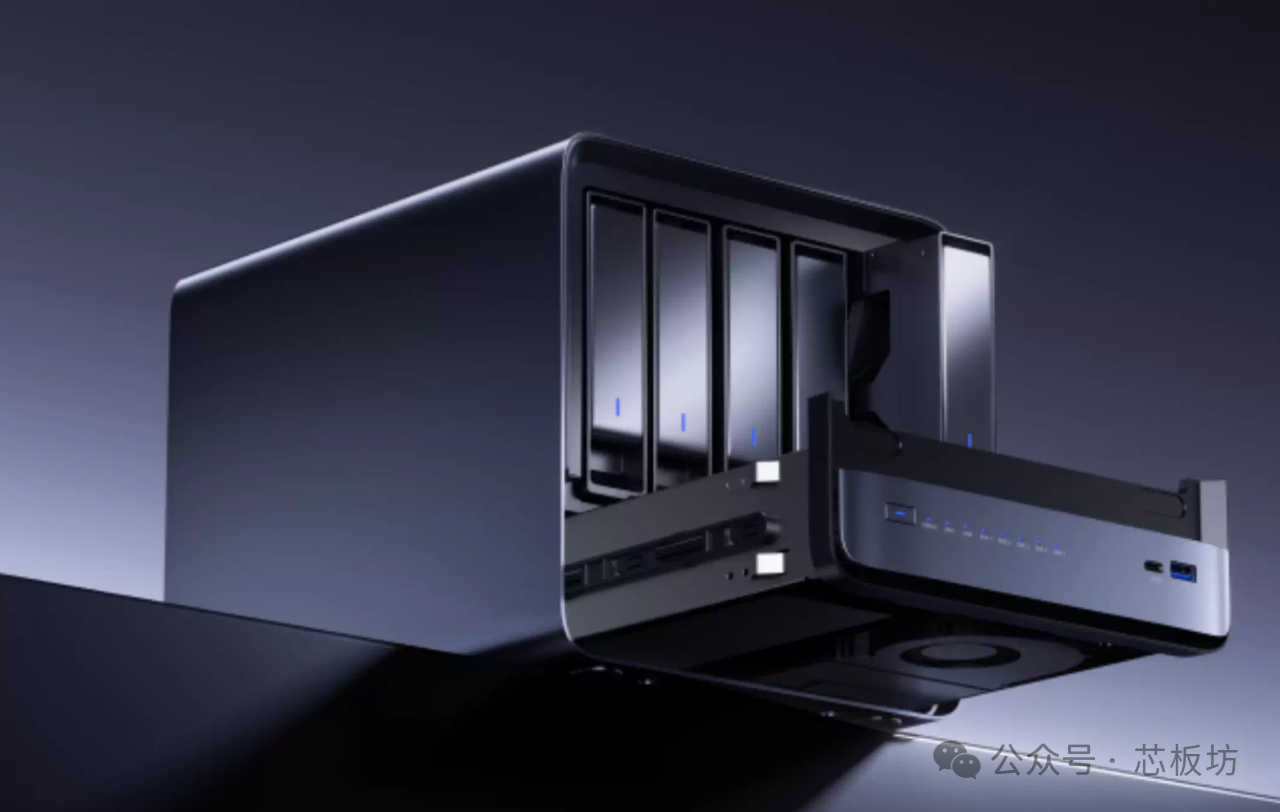
And Meigao Innovation, the parent company of Mingfan, which I introduced before, will also launch the AI NAS product N5R based on this core.
According to my observation, Mingfan will have the same chassis, and I found their product based on AMD Ryzen R7 225, which is a NAS.
It can hold five 3.5-inch hard disks and three M.2 solid-state hard disks.
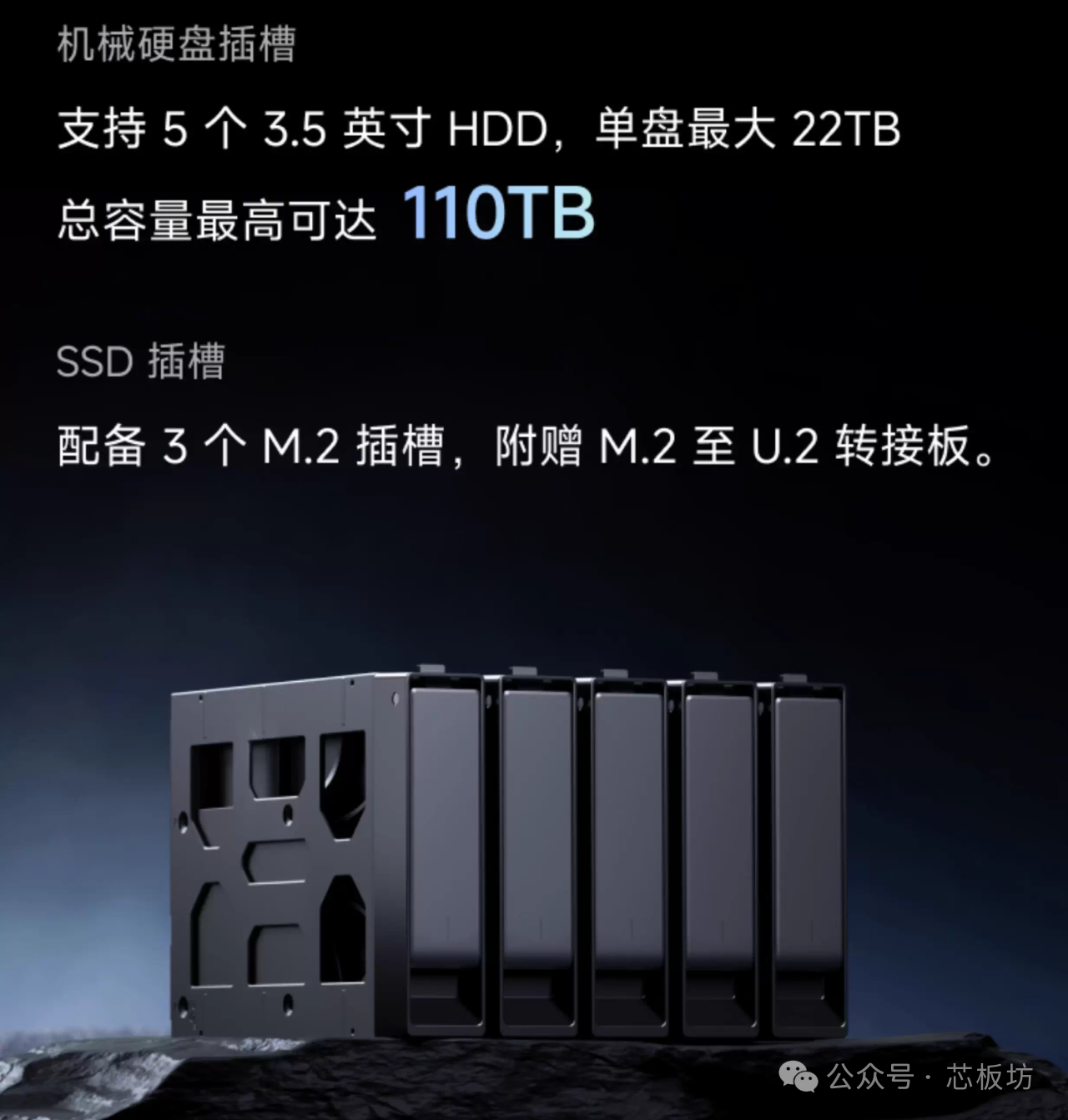
Pull-out motherboard design, hard disk can also be quickly replaced.
With a 5GbE network port and a 10GbE network port, HDMI2.1 and other interfaces.
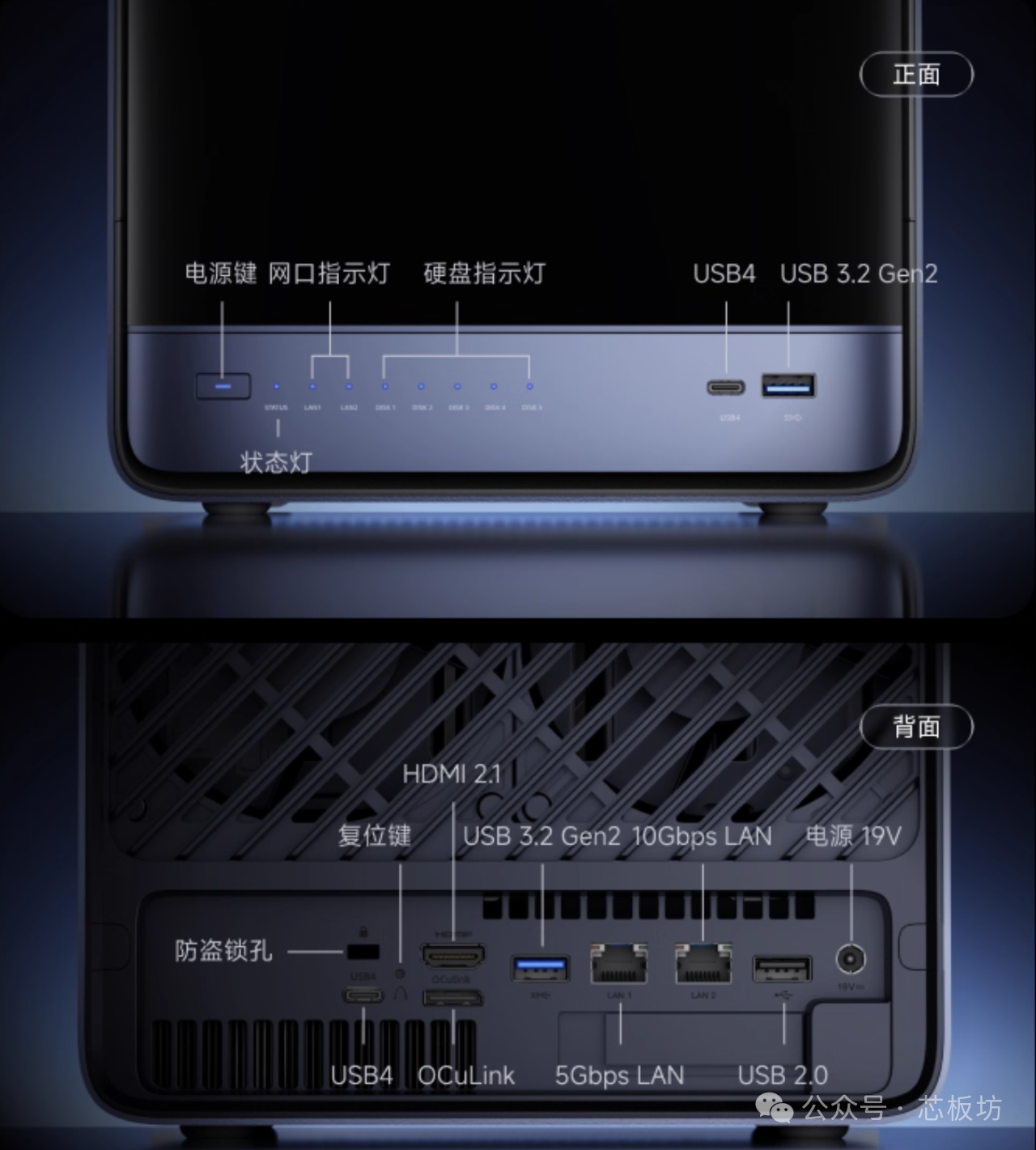
Before, I thought this core was quite suitable for small business servers or home servers, but I didn't expect it to be so fast. The only regret I think is that there is still a lack of NAS software at present. If you can really transplant the flying cow system and put it on it, it will feel quite cool.
At present, the price of Mingfan N5 is 128GB solid state without memory, and the price is 3699. With this core chip, I estimate that the price is similar, but it should be 32GB and 64GB memory versions. Now that memory chips are so expensive, I think this may really be an opportunity for ARM architecture equipment.
In terms of ecology, this core joined the Linaro Windows on Arm working group led by Microsoft three years ago, becoming the fourth member in the world, and established the development path of "integrating into ecology through standards".
Zhou Jie, general manager of this core market and ecology, gives an example: Standardization allows us to complete hardware adaptation with domestic GPU manufacturers within two weeks, light up Windows and run Black Myth: Wukong.
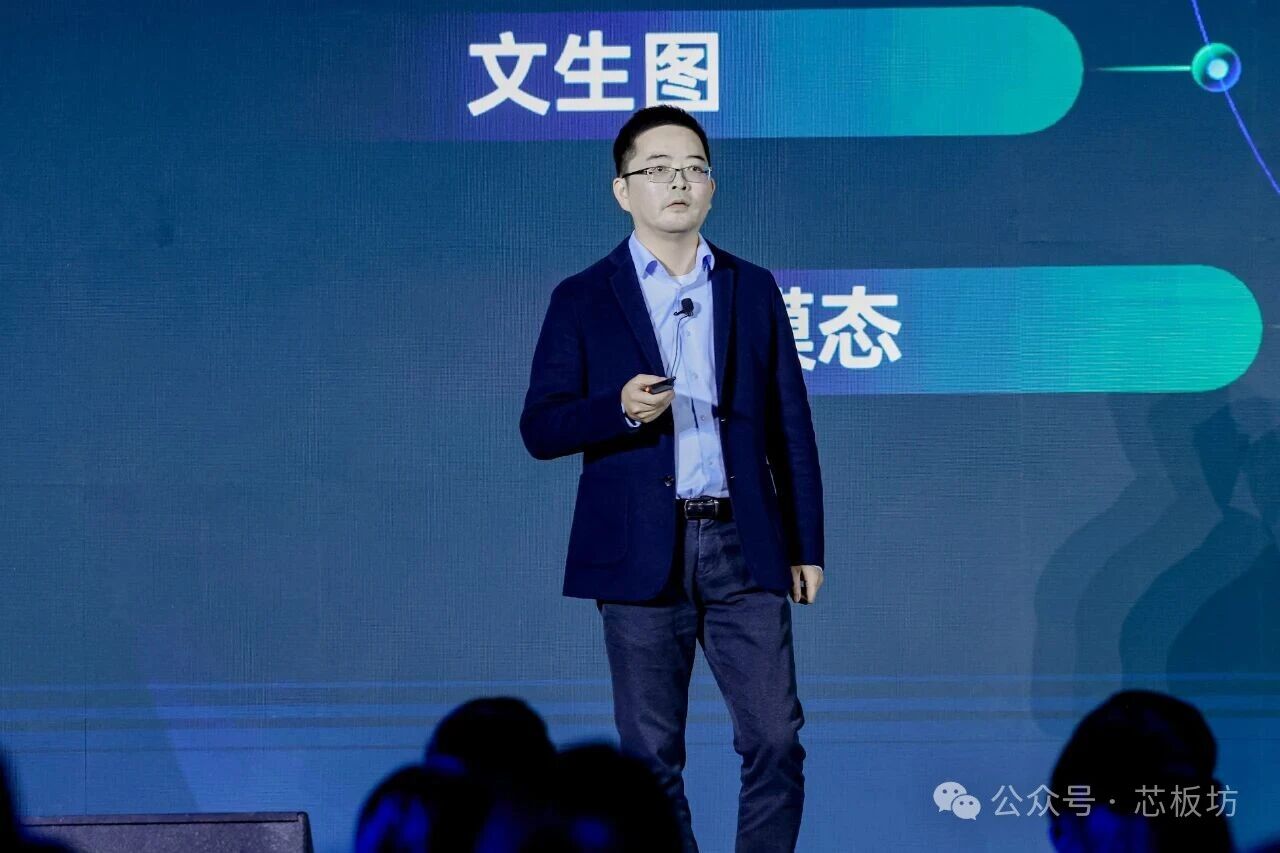
At present, this core has achieved systematic breakthroughs, including:
Promote key drivers such as PCIe to enter the Linux kernel, and it is expected that key drivers will be incorporated into the Linux6.19 kernel; Full-stack firmware is open source, covering EDK2 UEFI firmware, TF-A secure boot chain and OP-TEE trusted execution environment;
Pass the Arm SystemReady L6 certification, and reach the data center-level hardware compliance standard;
Start Project ARP and build an Armv9PC reference platform with Microsoft, ARM and Linaro.
The open source firmware of this core technology innovatively realizes that the same set of firmware supports both ACPI and Device Tree, and also optimizes the kernel scheduler for real-time scenarios to reduce the task delay to microsecond level. At present, this core has opened 115 end-to-end optimization models in the magic community, covering a variety of scenarios.This core also cooperates with Tianzhixin to jointly develop the heterogeneous scheme of robot "brain+cerebellum".
Committed to building an end-to-end universal intelligent computing base, focusing on three computing platforms: PC, vehicle and robot.
At present, in terms of hardware, this core explores the improvement of integration and energy efficiency through 3D packaging, and in terms of software, it is committed to building a complete tool chain and lowering the development threshold.
He also said that this core will launch a new generation of chips in 2026 to further strengthen AI computing power and energy efficiency.
This is interesting. Ruixinwei will also release their RK3688 in 26 years. I estimate that this core will also build their chips based on the same ARM v9.3 as Ruixinwei.
Now the AI comprehensive computing power of this core has reached 45TOPS, and the next generation of products will inevitably be higher. I think it is right to choose this core for playing AI. After all, it took 26 years for Ruixinwei's RK3688 to reach 32TOPS. However, Ruixinwei seems to be taking the path of coprocessor, and it can calculate the power through UCIe.
Anyway, the development of the development board will be more fun next year, and I really look forward to it.
The open source firmware of this core technology innovatively realizes that the same set of firmware supports both ACPI and Device Tree, and also optimizes the kernel scheduler for real-time scenarios to reduce the task delay to microsecond level. At present, this core has opened 115 end-to-end optimization models in the magic community, covering a variety of scenarios.